ZBLAN Optical Fiber
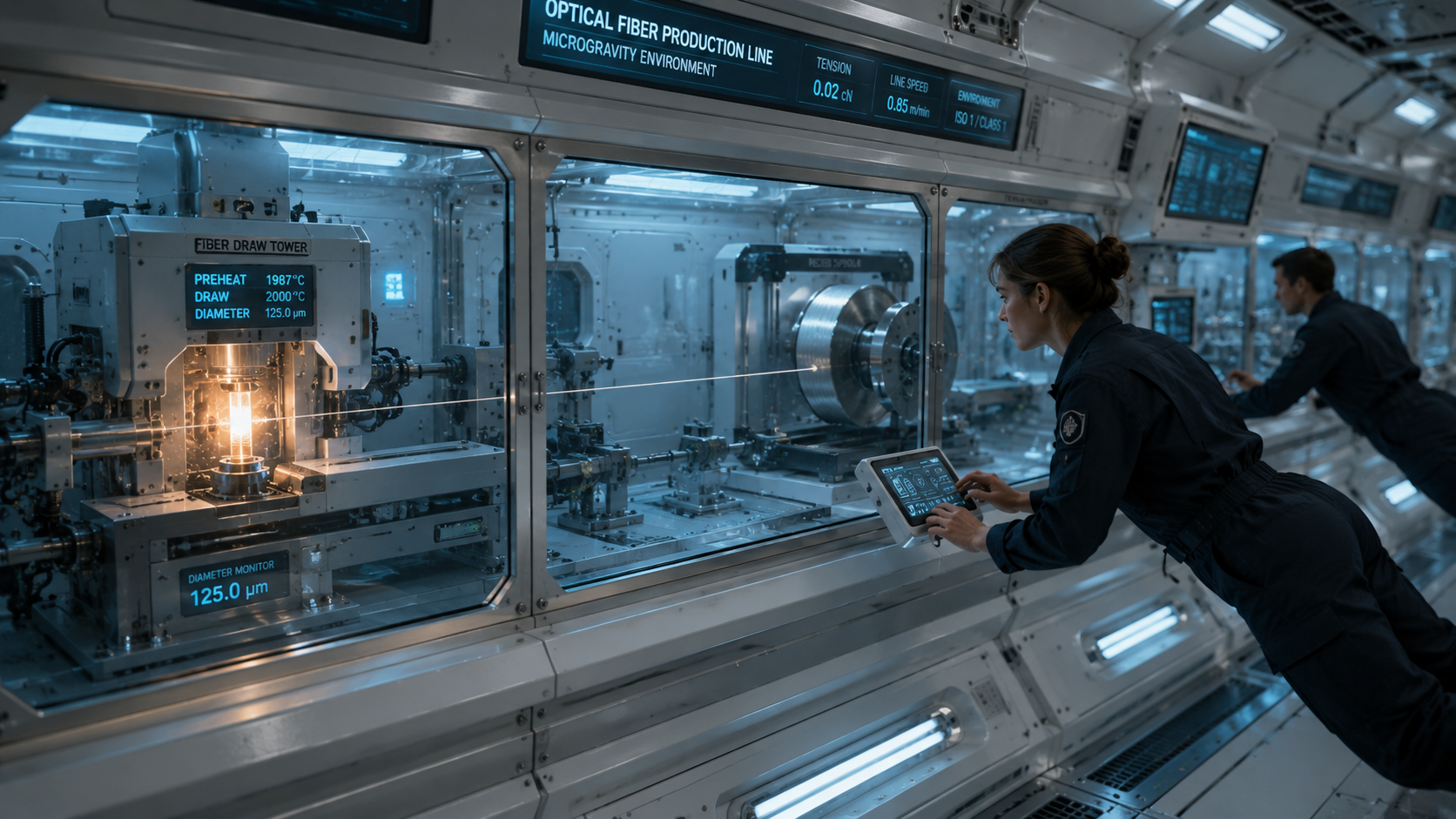
Fluoride-glass fiber drawn in freefall, where the absence of gravity prevents the micro-crystal defects that cloud Earth-made fiber — a dramatically lower-loss product, pulled in a dead-straight line in the hub.
Concept Explorations
An industry only earns a place in orbit if being there makes it better or cheaper than on Earth. Three things orbit provides — microgravity, vacuum and abundant solar, and proximity to lunar resources — and Aegis Station's industries cluster around them.
Concept explorations, not committed plans. Industry lives in the station's weightless central hub; the spinning habitat rings are for living.
Reaching lunar orbit from Earth takes roughly 13 km/s of rocket effort — most of it spent just climbing out of Earth's gravity well. The return costs under 1 km/s plus a heat shield: a craft leaves the Moon's shallow well almost for free, then lets Earth's atmosphere do the braking on arrival. The expensive direction is up. So products made on Aegis Station reach markets on Earth by the cheap leg — downhill, with the atmosphere braking for free — which is what turns "made in orbit" into a business rather than a demonstration.
High-value products whose quality depends on freefall — drawn, printed, or grown without gravity pulling them out of shape.
Fluoride-glass fiber drawn in freefall, where the absence of gravity prevents the micro-crystal defects that cloud Earth-made fiber — a dramatically lower-loss product, pulled in a dead-straight line in the hub.
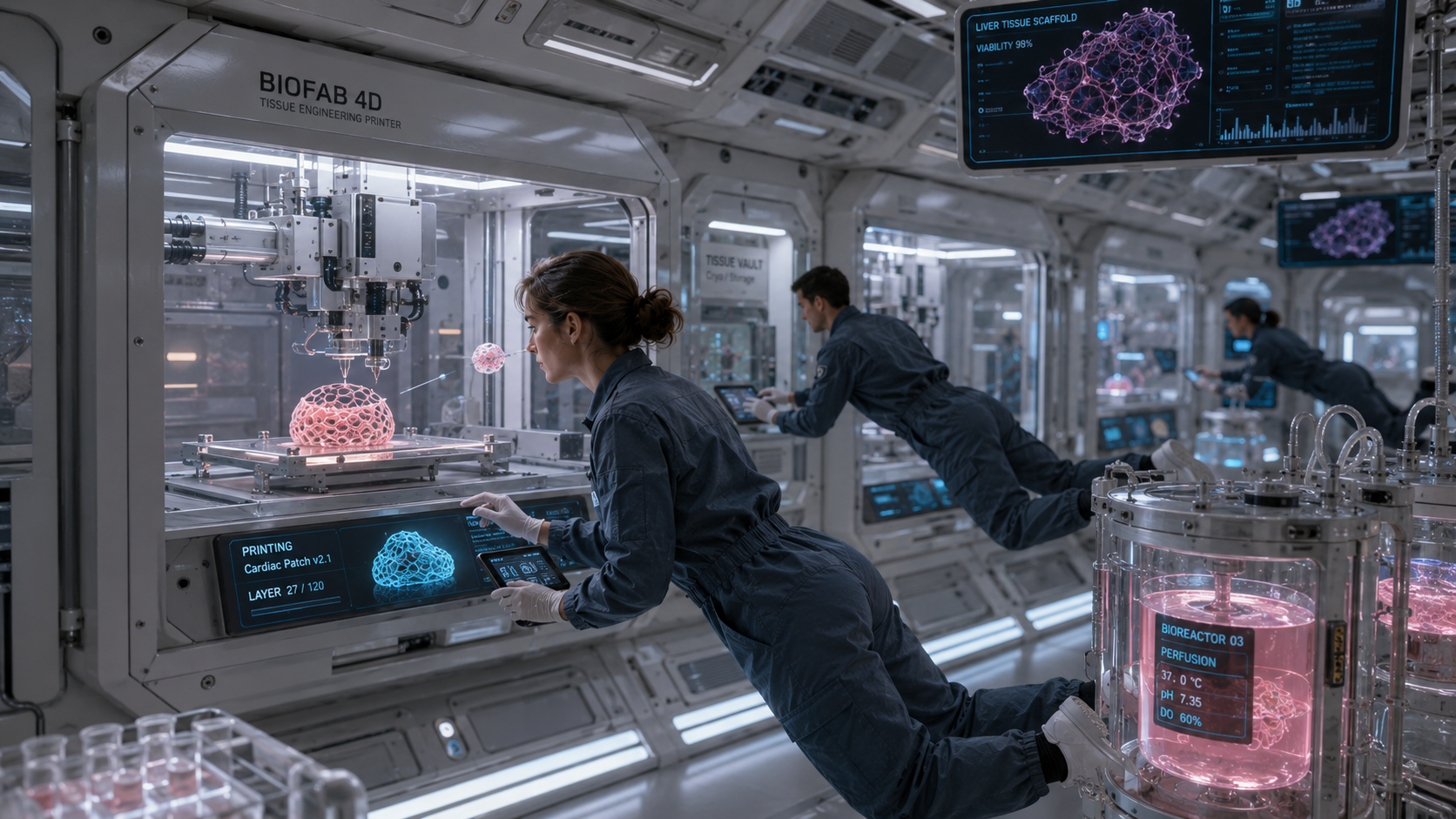
Printing tissue and organoids that would sag and collapse under their own weight on Earth, but hold their three-dimensional shape freely in zero gravity. Frontier medical manufacturing.
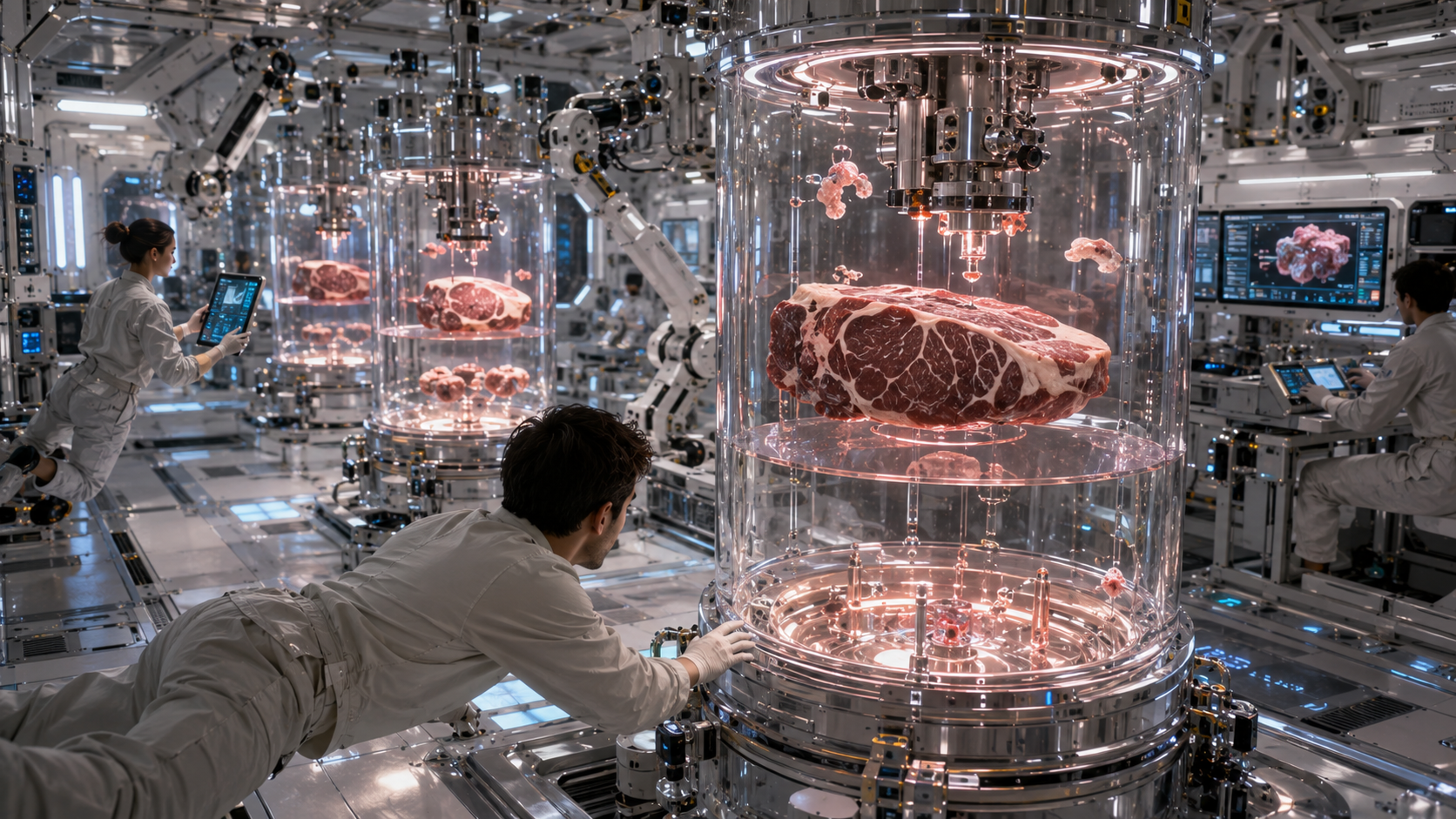
The hard part of a cultivated steak is structure — on Earth, thick tissue sags and collapses under its own weight before it sets. In freefall it holds its shape, so cells self-assemble into real texture and marbling. (Cultivated beef has already been grown in orbit.)
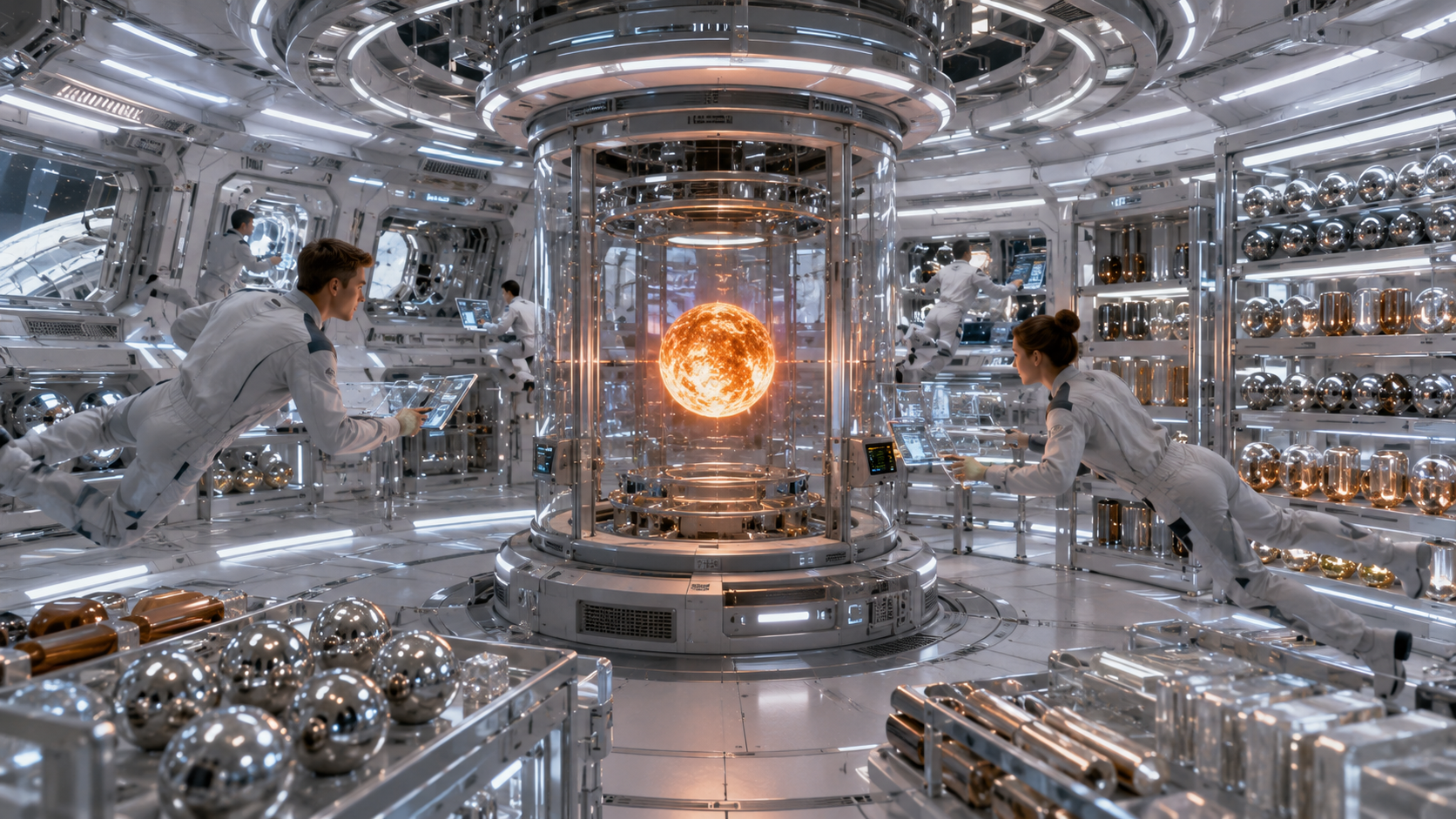
Metal melted while floating free — no crucible to touch it or contaminate it. In freefall, containerless melting yields perfect spheres, metallic glasses, and alloys of metals that refuse to mix under gravity.
Also in development: defect-free semiconductor and scintillator crystals grown free of gravity-driven defects.
Industries that exist because the station sits where it does — downstream of lunar water, upstream of everything cislunar.
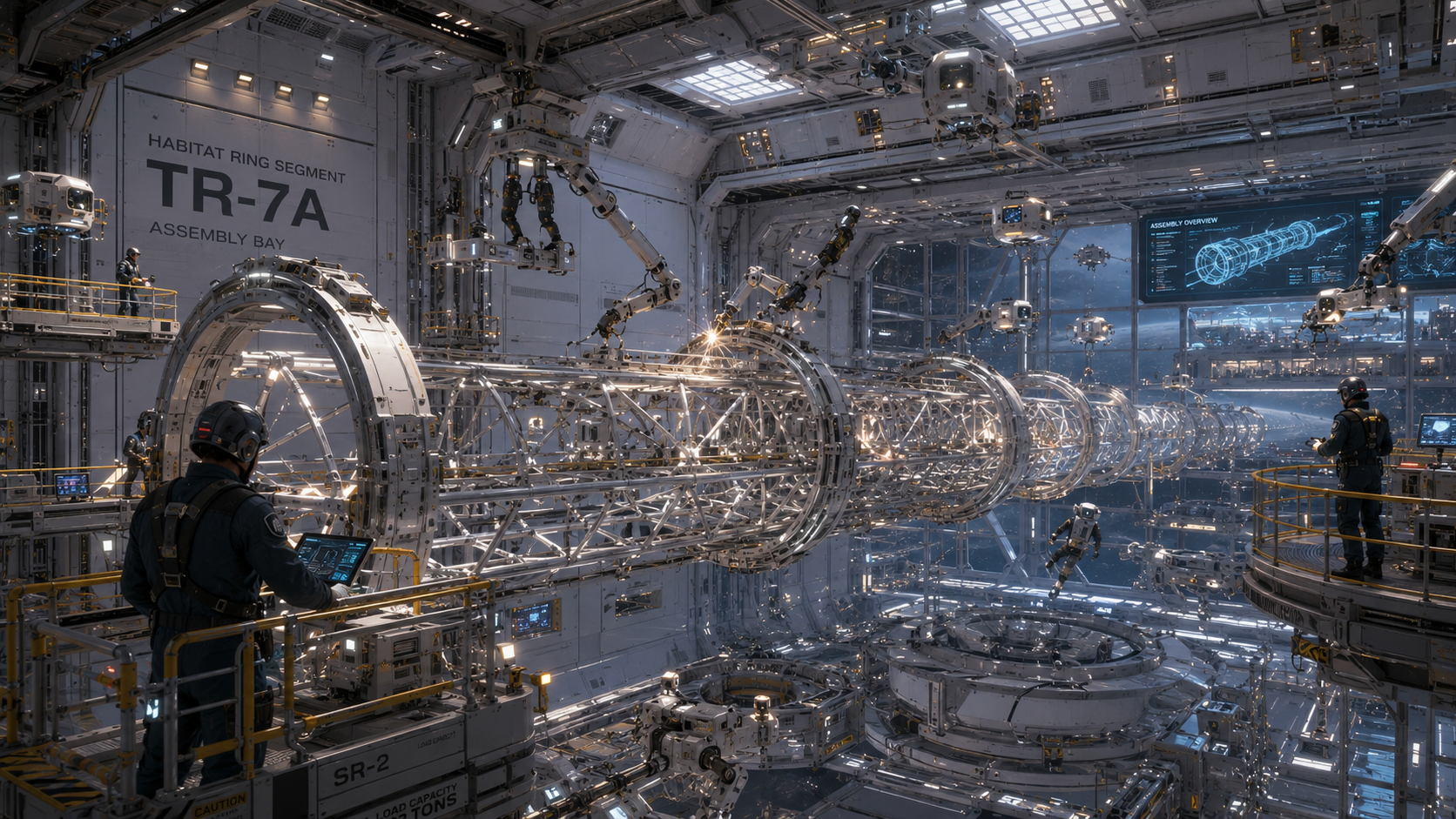
Assembling structures too large to launch from Earth — trusses, antennas, the next habitat ring — from components handled by robotic arms and free-flying work-pods in the hub. We don't ship the station up; we build it here.
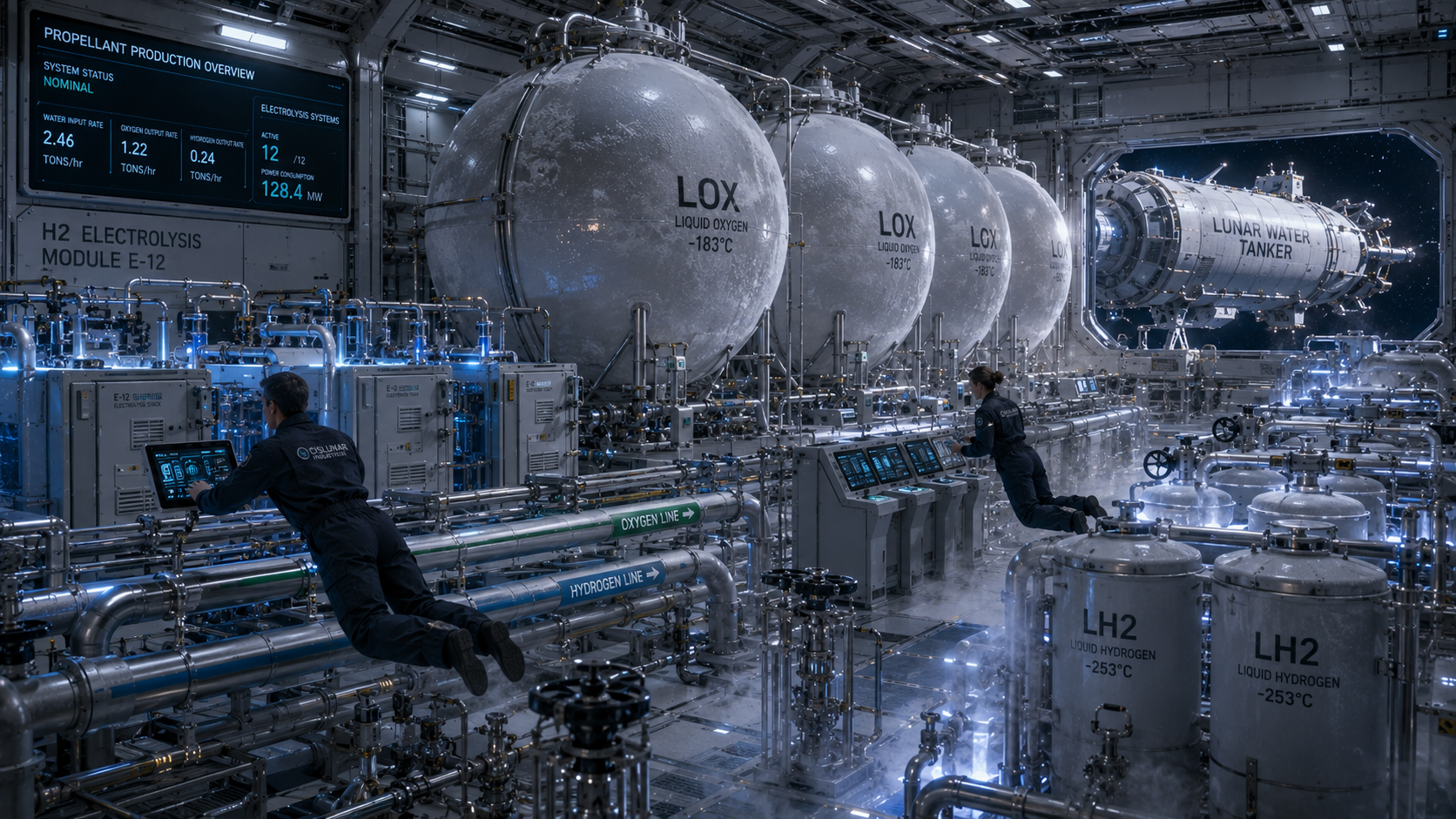
Electrolyzing lunar water into oxygen and hydrogen and storing it cryogenically — turning the tanker fleet's deliveries into propellant. The gas station for cislunar space, feeding the depot and everything that moves through lunar orbit.
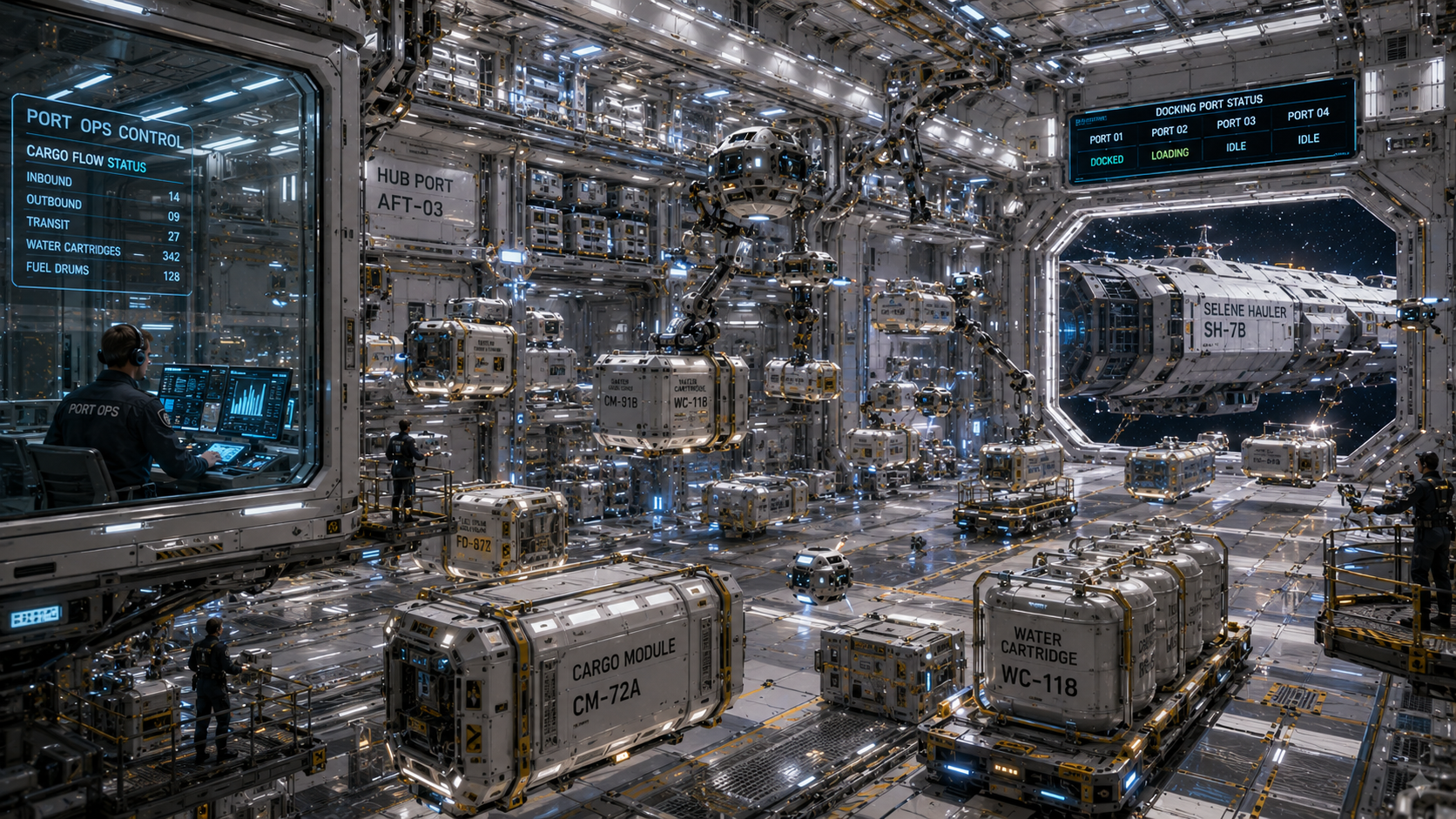
Cargo modules, water cartridges, and fuel drums moving through the station's docking ports under robotic handling — the transshipment heart of a cislunar trade route, where everything bound for the Moon or beyond changes hands.
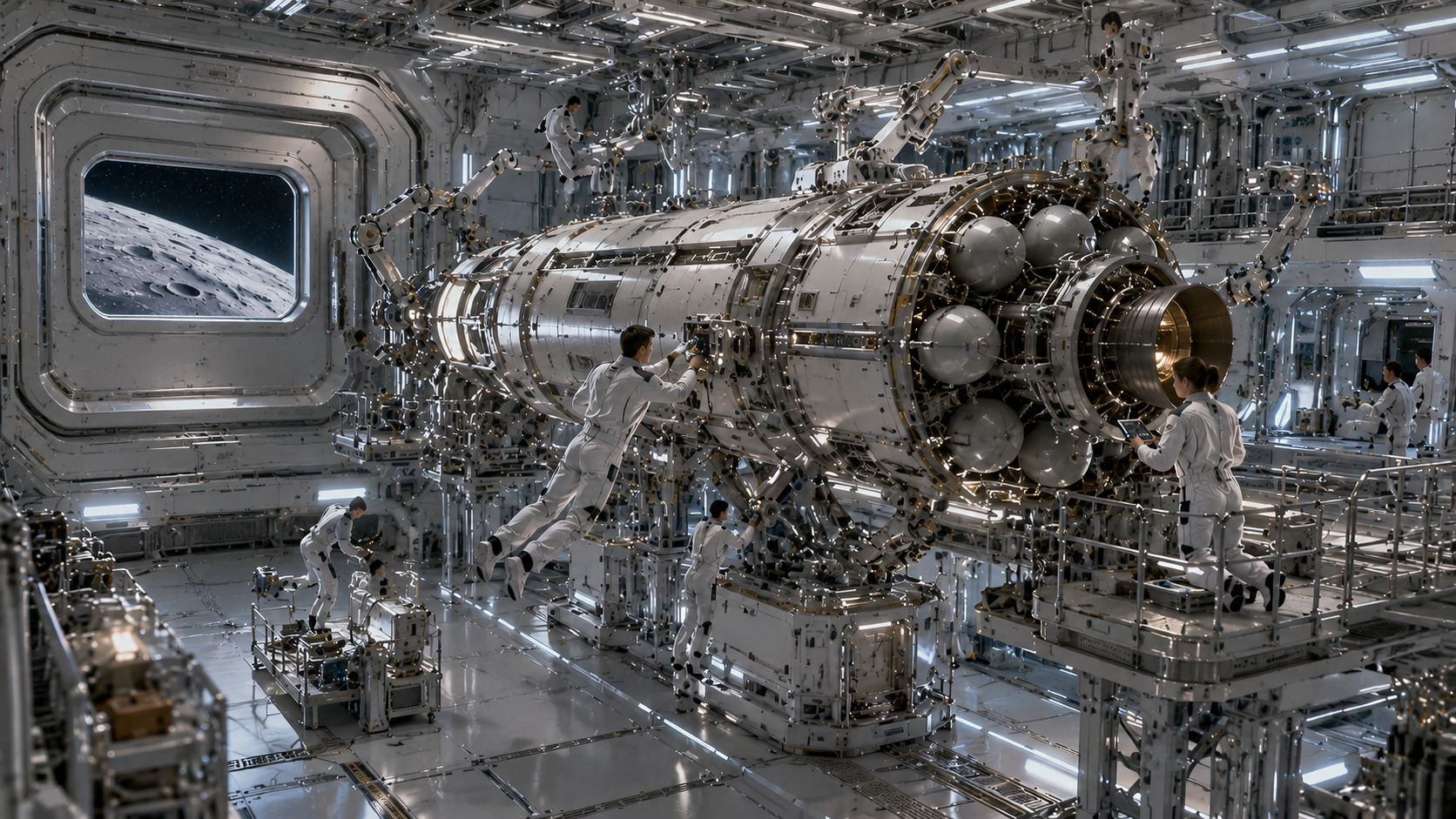
Where the cislunar fleet is kept running — tankers, haulers, and tugs inspected, refueled, and refurbished between runs. Not building new structure like the assembly bay, but keeping the existing fleet alive, with the Moon in the window.
Less export, more upkeep — the closed-loop systems that let a permanent community sustain itself. It starts with food: grown in the rings, prepped in the hub, served in the galley.
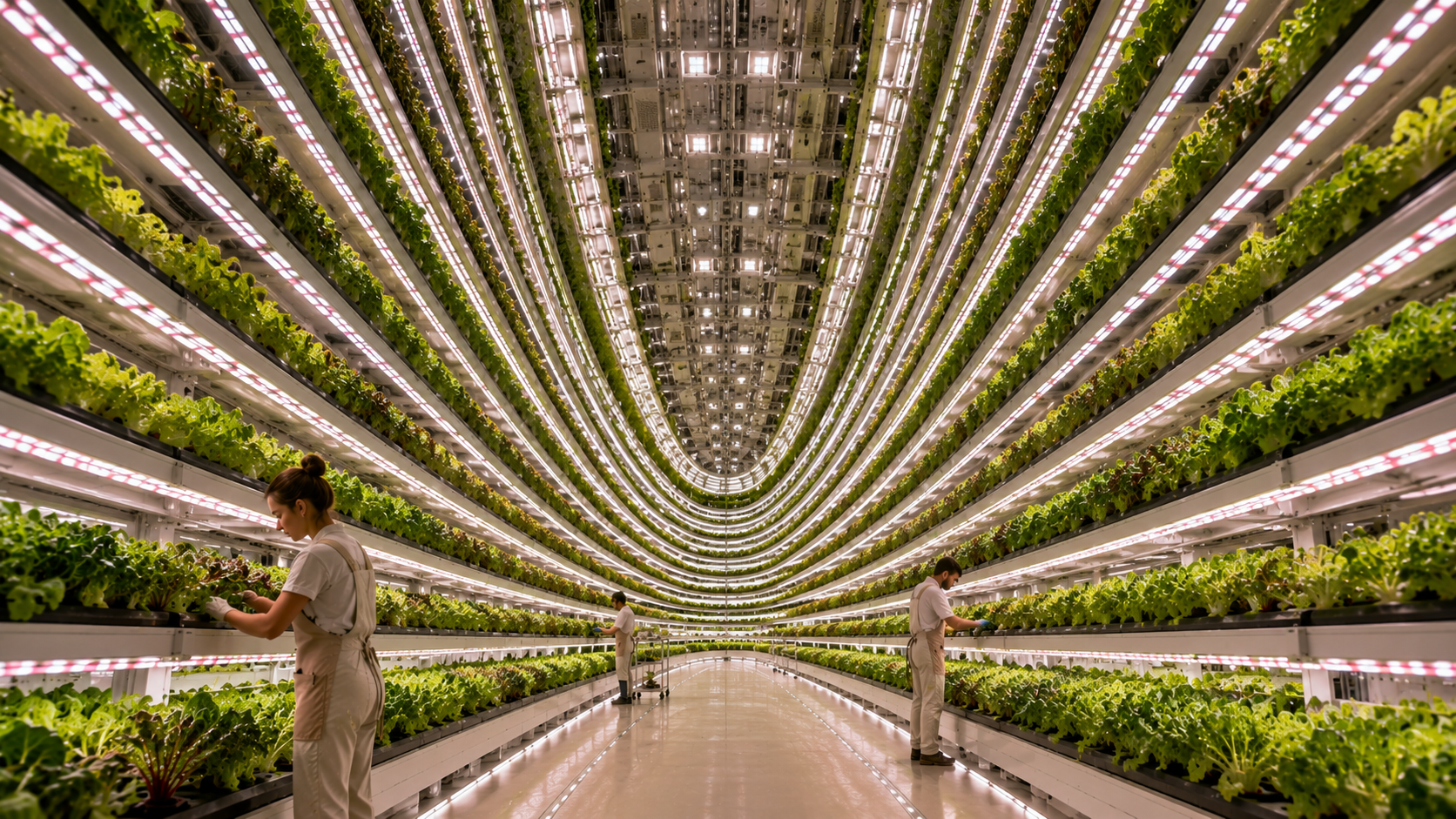
Vertical rows of leafy greens and crops under full-spectrum light inside a 1g ring, the farmland sweeping up and over the artificial-gravity horizon. The fresh half of feeding a city in orbit.
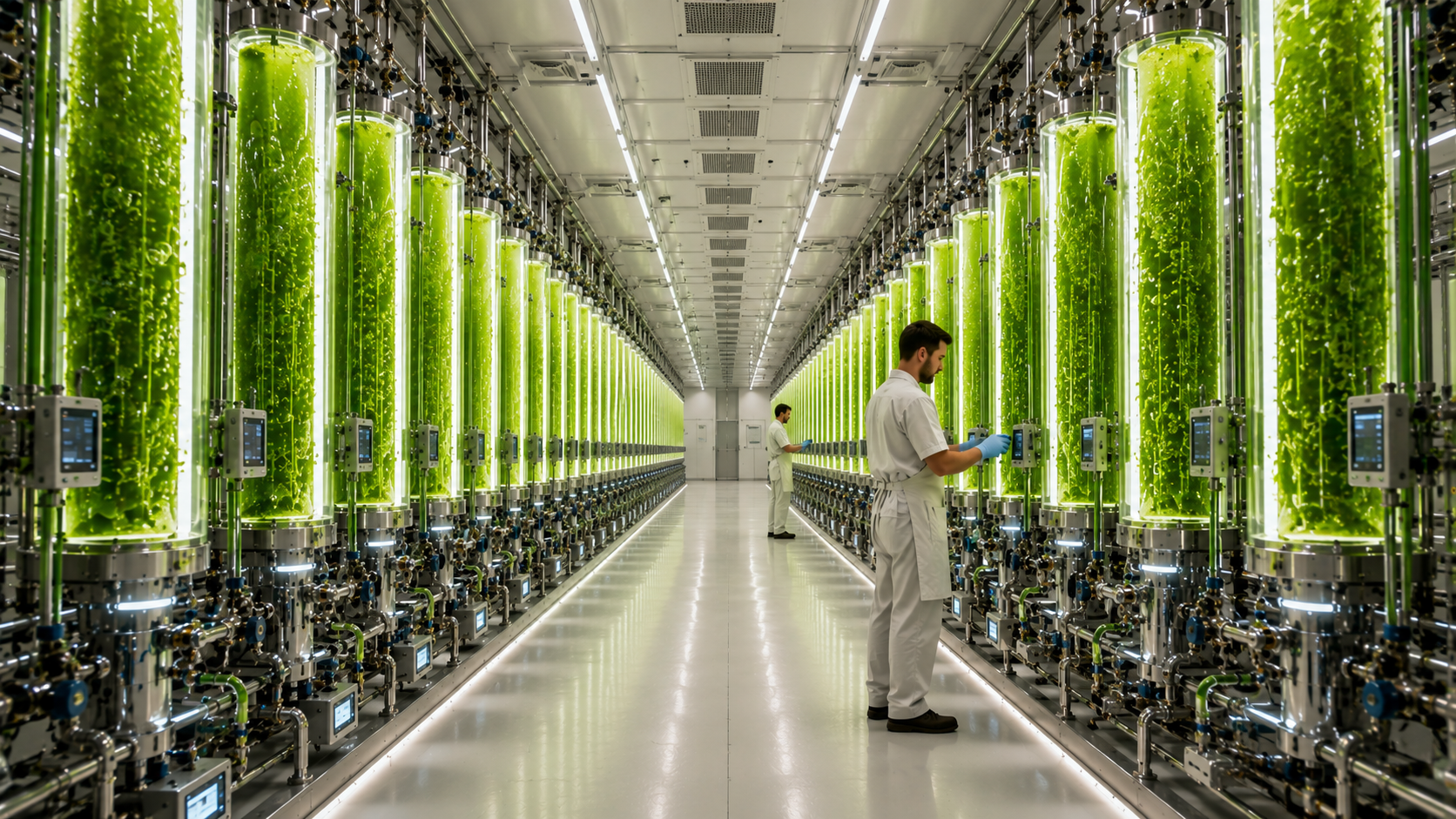
Walls of glowing spirulina and chlorella — dense protein, oils, and vitamins grown in light, doubling as air revitalization. The cheap, tireless base of the food supply: food and fresh air from the same tube.
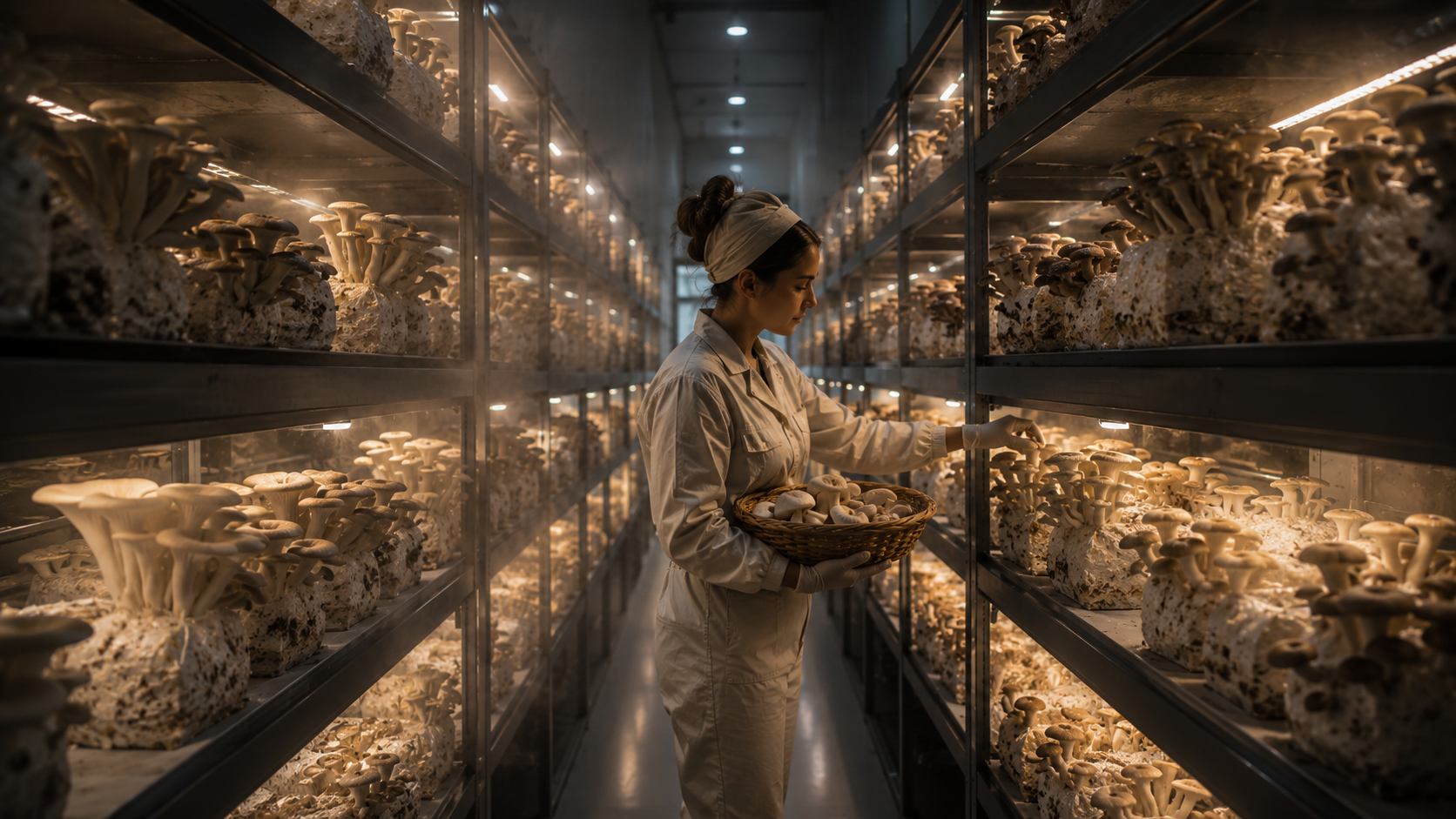
Tiered racks of mushrooms turning plant waste into high-protein food in low light — compact, fast-growing, and closing the loop. Earthy, satisfying sustenance alongside the greens.
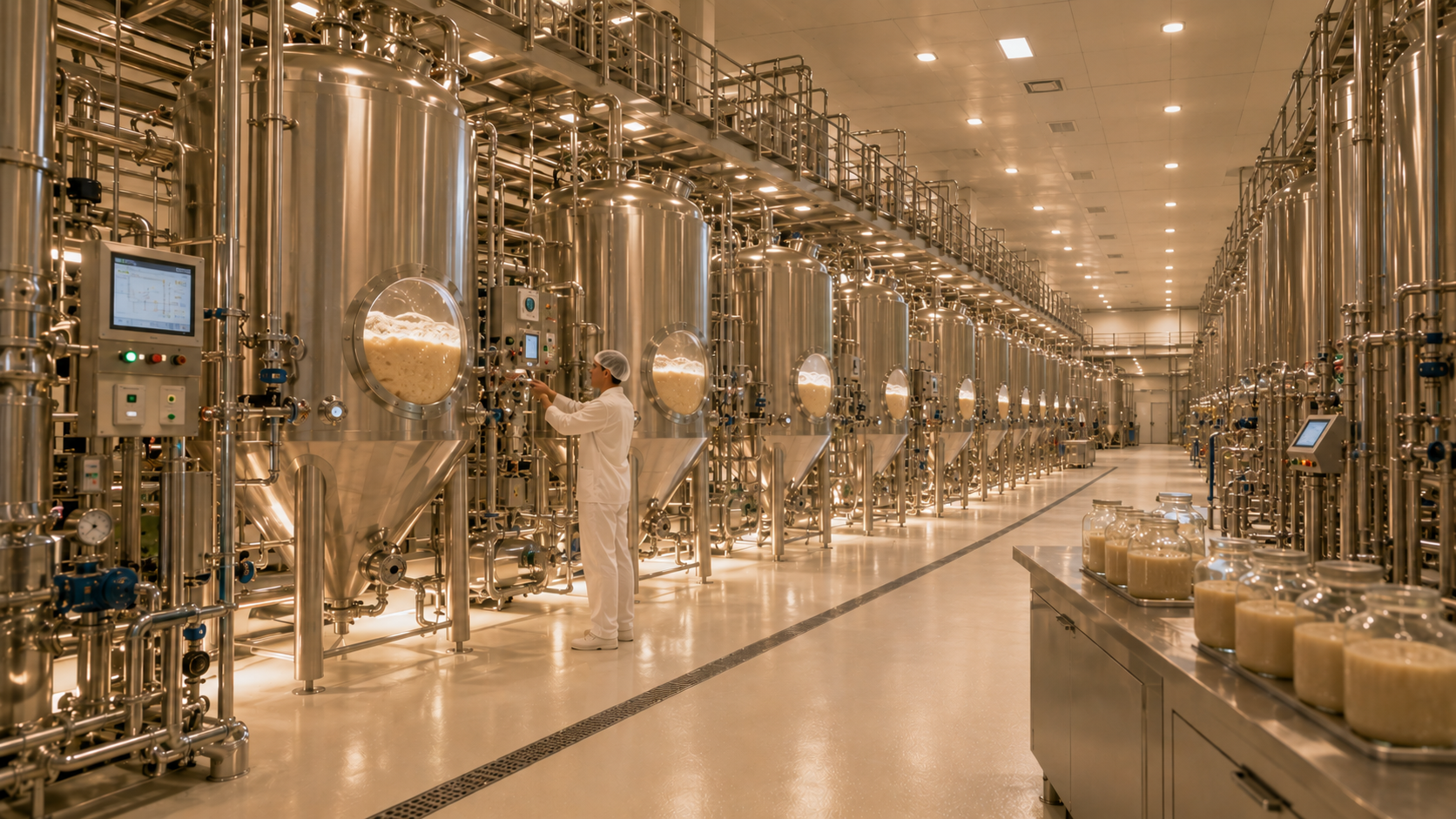
Engineered yeast in stainless fermenters churning out protein, vitamins, and oils — NASA's BioNutrients idea at city scale. A tireless nutrient factory backing up the farms with what greens and mushrooms don't supply.
Also in development: zero-g food prep, on-demand fabrication and repair, and water reclamation and recycling.