Stacked Solar-Shade
Radiator Architecture
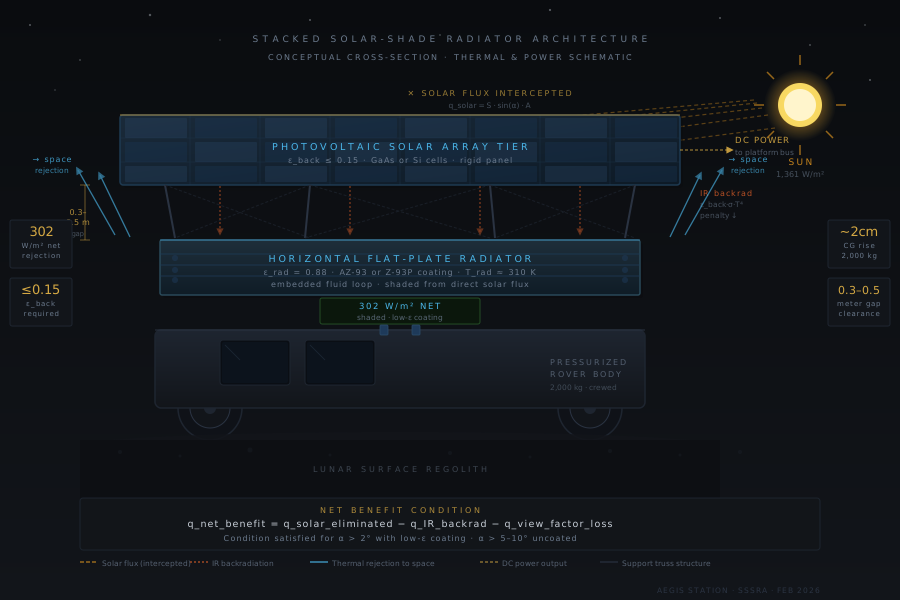
A photovoltaic canopy mounted above a horizontal flat-plate radiator, shading it from the sun while generating power. Rev B rebuilds the analysis from the real geometry: a canopy large enough to cast a shadow occupies most of the radiator's view of the sky, so a clean radiator is never improved by it. The configuration pays in one regime, fixed assets within about 15° of the equator running through lunar noon with dust-degraded radiators, where a canopy 3 m or more above the radiator holds rejection at roughly four times the unshaded value while producing power and a shaded work area. It is a fixed-asset configuration for low latitudes rather than a vehicle roof, and polar sites do not need it: the Aegis polar vehicles carry unshaded radiators and keep the roof power-and-thermal interface plate defined alongside the concept.
Rev B rebuilds the February 2026 analysis. Every table is generated from one closed-form model whose inputs are coating properties and geometry; the radiator-to-canopy view factor is computed numerically for the actual rectangles rather than assumed.
the canopy pays
above the radiator
vs unshaded, equatorial noon
Variable Reference