Closed-Loop Microgravity Hygiene System (CMHS)
A contained hygiene and waste-management architecture for long-duration human spaceflight, enabling real washing with water and soap and reliable waste capture in microgravity.
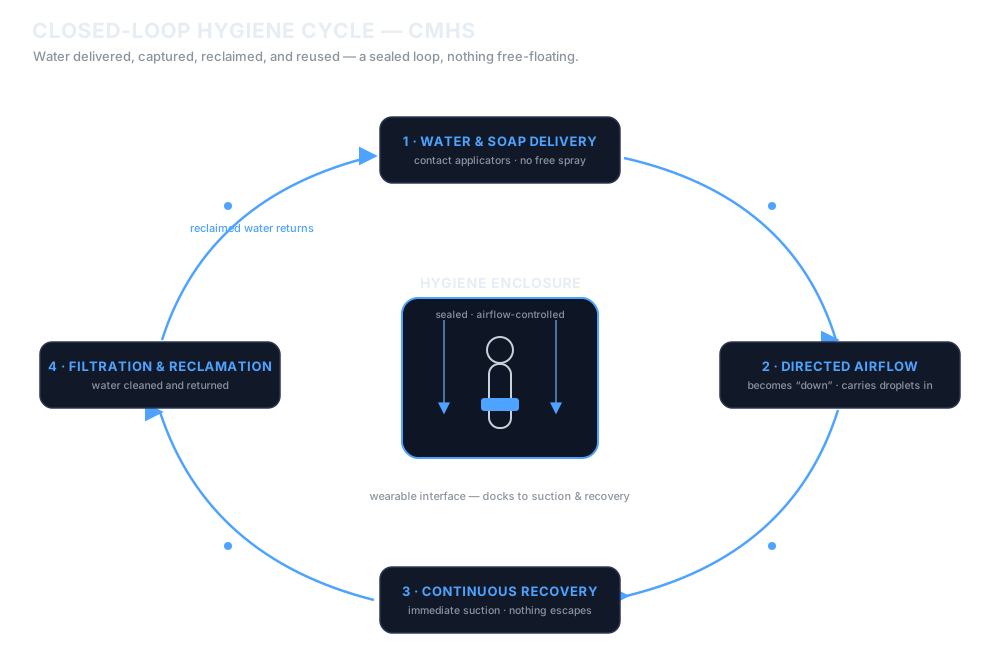
Core Principle: In microgravity, airflow replaces gravity. CMHS uses controlled airflow, contact-based water delivery, and continuous recovery to make familiar hygiene possible without free-floating liquids.
Why It Matters
- Current systems rely on wipes and awkward procedures
- Free-floating liquid contamination remains a risk
- Crew comfort, morale, and hygiene degrade over time
- Future stations and commercial habitats require scalable solutions
CMHS treats hygiene as infrastructure, not a workaround.
System Architecture
1. Hygiene Enclosure
A compact, sealed environment that isolates the hygiene process from the cabin. Captures droplets, supports airflow control, and enables repeatable operation.
2. Directed Airflow Field
A controlled ventilation system creates a directional flow that acts as “down,” guiding water, vapor, and waste toward recovery zones.
3. Controlled Water and Soap Delivery
CMHS supports plain warm water, liquid soap, and clean-water rinse. Water is delivered through contact-based applicators or low-velocity emitters to prevent droplet escape.
- No free spray fields
- No reliance on exotic fluids
- Optional foam mode for constrained operations
4. Continuous Recovery System
All liquid is captured immediately via suction and routed into filtration and reclamation systems. No uncontrolled water remains in the enclosure.
5. Personal Wearable Hygiene Interface
A waist-mounted, brief-like personal interface worn during use provides stable alignment and reliable sealing.
- Anchored at the waist for repeatable positioning
- Soft, anatomically matched seal regions
- Integrated channels for waste capture and rinse
- Docking port connects to station suction and recovery systems
Key Insight: The interface comes to the body first, then docks to the system—eliminating reliance on precise crew positioning.
Reusable and Disposable Options
- Reusable Interface: Durable personal garment, cleaned and maintained by the user
- Disposable Contact Liners: Optional thin liners for hygiene and reduced cleaning burden
- Modular Inserts: Replaceable seal components for fit and maintenance
This hybrid approach balances comfort, hygiene, and logistics.
6. Integrated Cleaning Cycle
After waste capture, the system provides:
- Targeted rinse using clean water
- Immediate suction recovery
- Optional warm-air drying
No wipes required. No free-floating droplets.
Operating Modes
- Quick Hygiene: Daily cleaning and refresh
- Full Wash: Whole-body washing with soap and rinse
- Toilet Mode: Waste capture with integrated cleaning
- Assisted Mode: Support for injured or fatigued crew
Feasibility
CMHS leverages existing capabilities:
- Airflow control systems (ISS, cleanroom engineering)
- Closed-loop water recovery
- Medical-grade soft sealing materials
- Low-flow fluid delivery systems
The primary development challenges are seal design, user comfort, and system integration, not fundamental technology gaps.
Key Benefits
- Improved crew comfort and dignity
- Reduced contamination risk
- Lower operational burden
- Scalable across stations, vehicles, and commercial habitats
- Standardizable habitation subsystem
Strategic Framing
CMHS is not a bathroom upgrade. It is a habitability system.
Long-duration spaceflight requires infrastructure that is not only functional, but livable. Hygiene is a core part of that equation.